The photo project “Memories of the Kyiv-Pechersk Lavra”
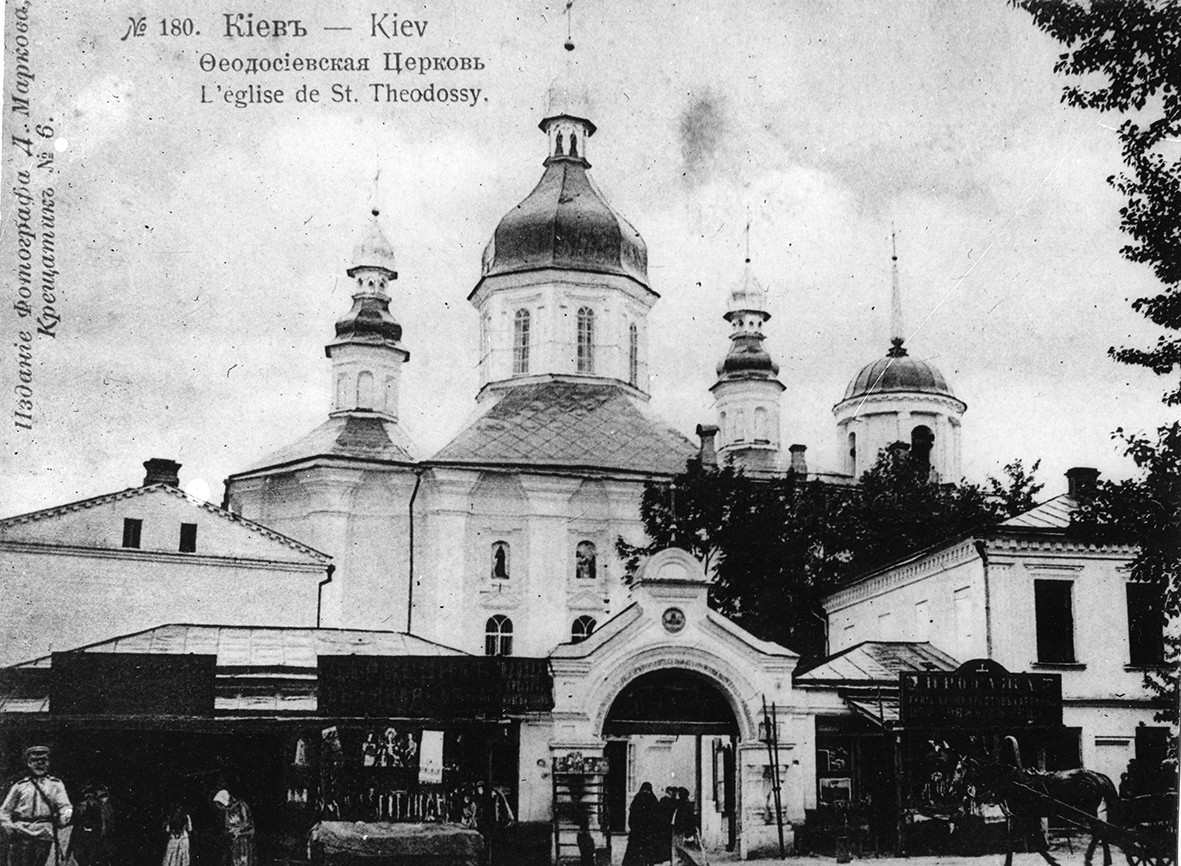
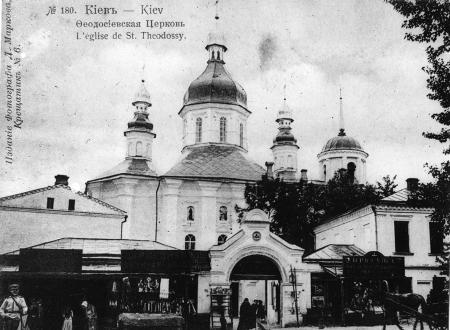 Today we present you a selection of photos “Ancient Pechersk outside the walls of the Lavra” By means of old photographs we will walk through the Lavra surroundings and see the most interesting sights that were located there in the early 20th century.
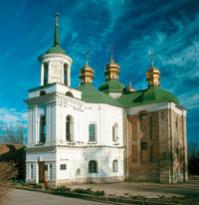
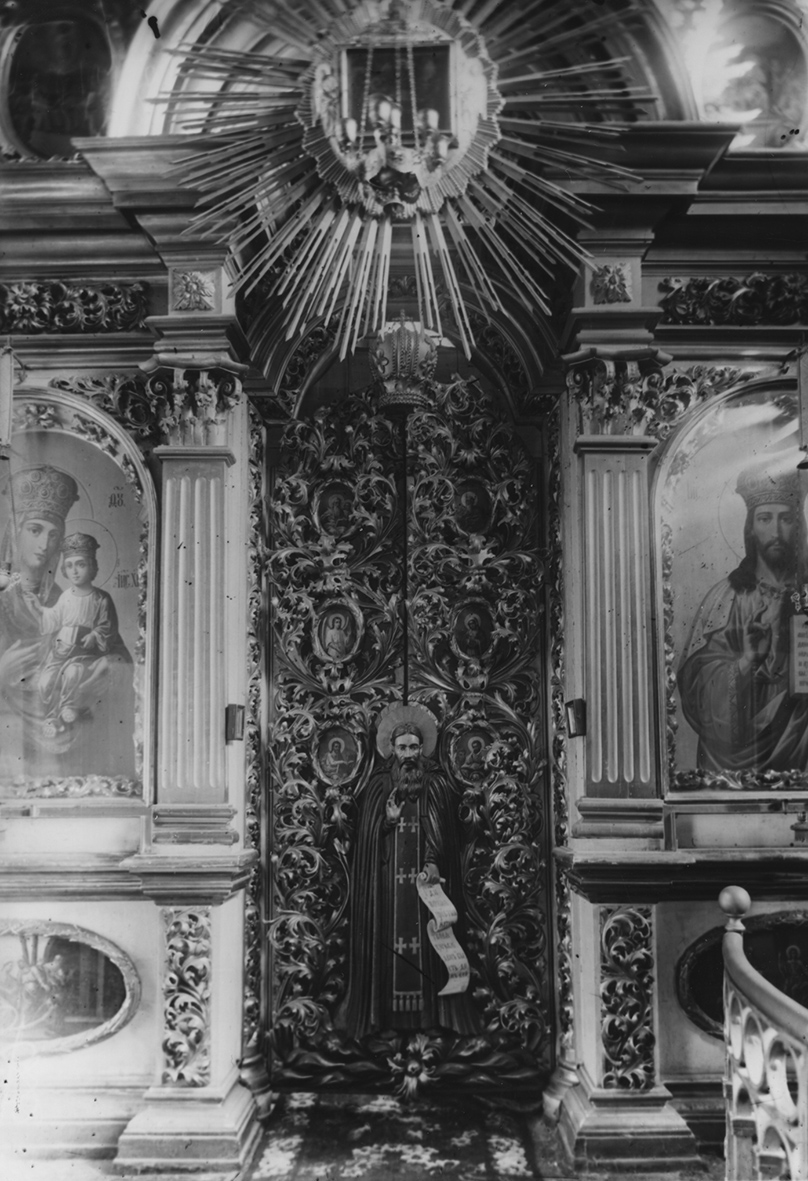
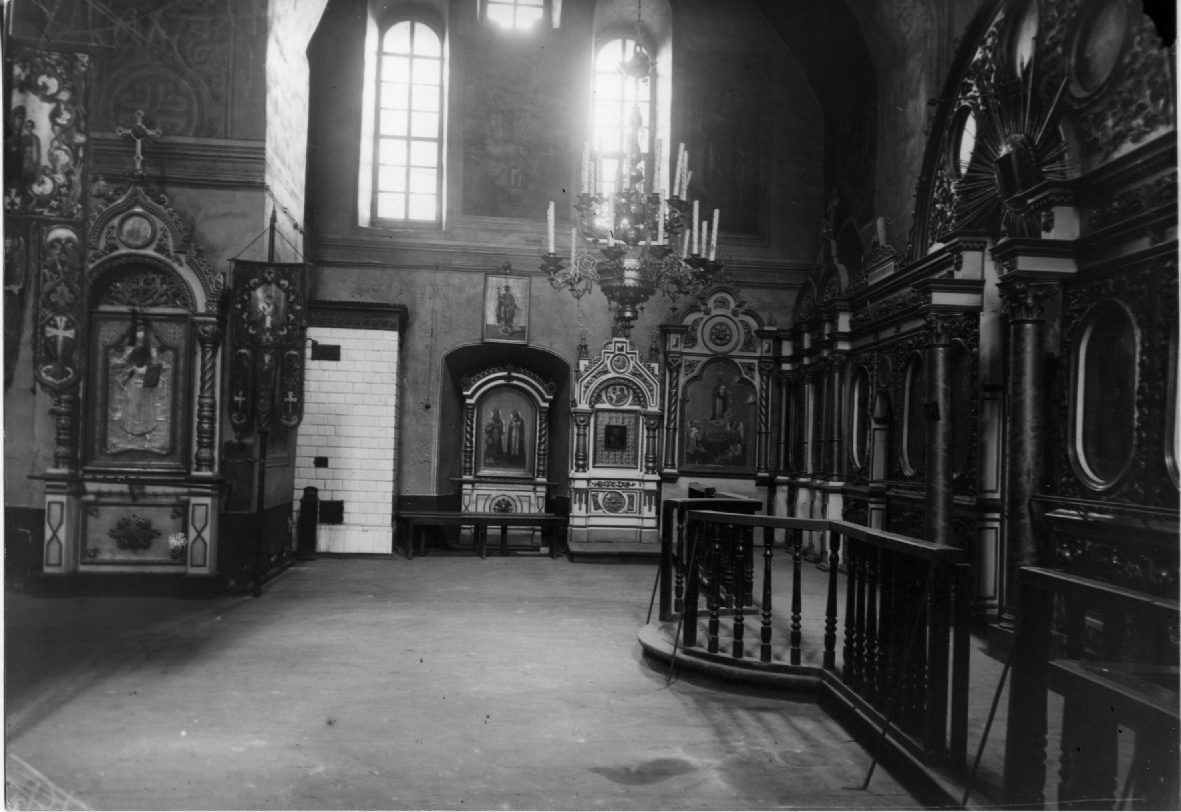
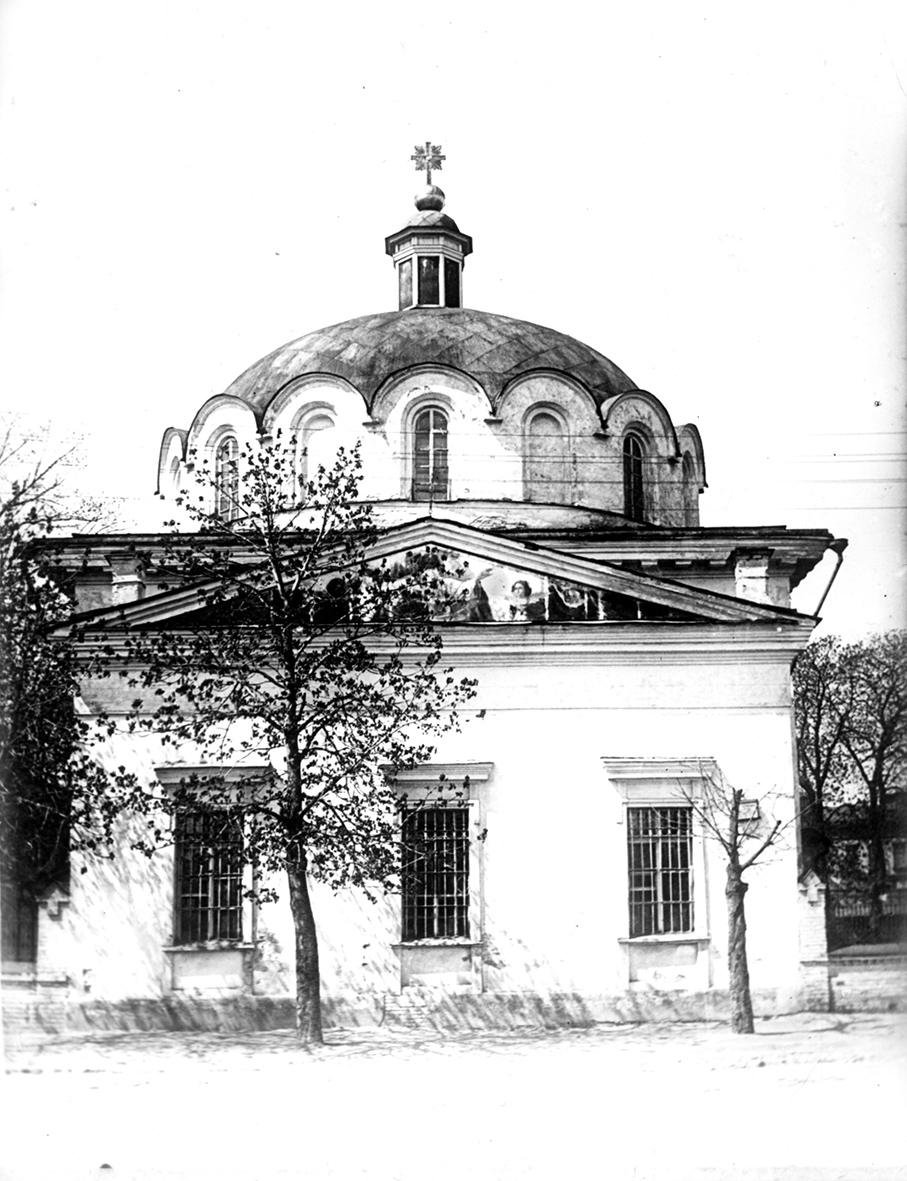
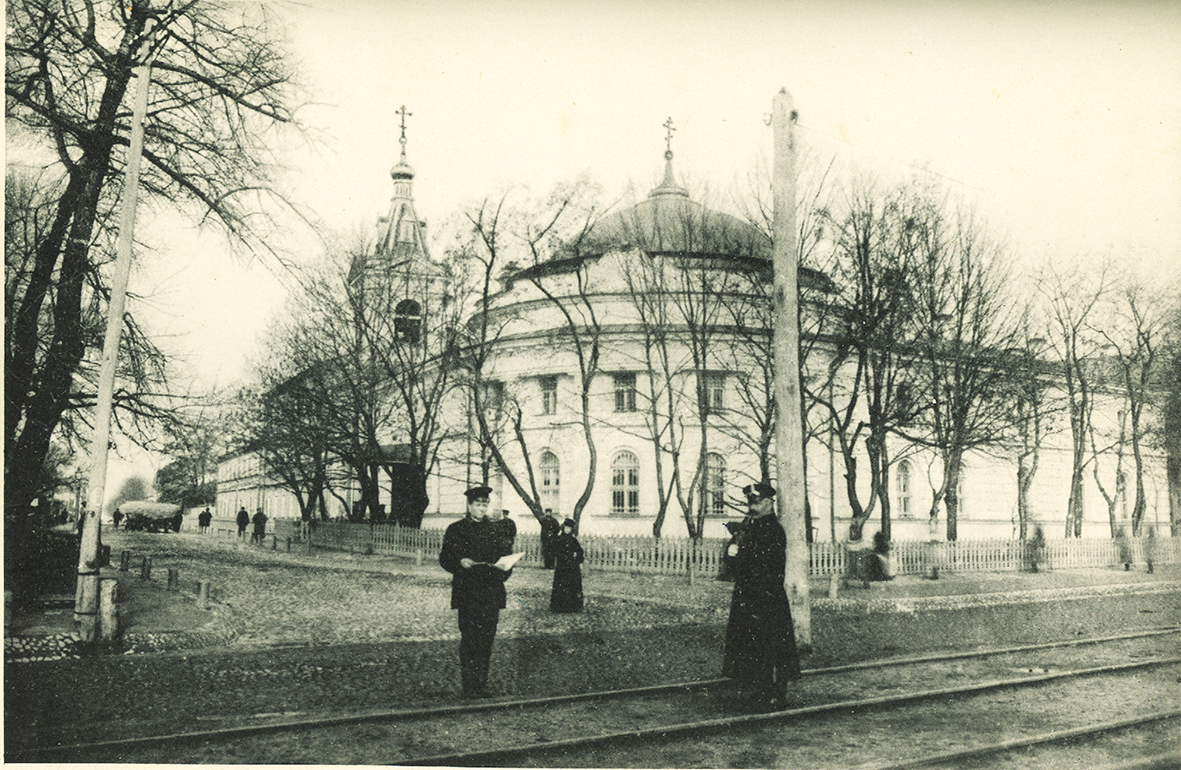
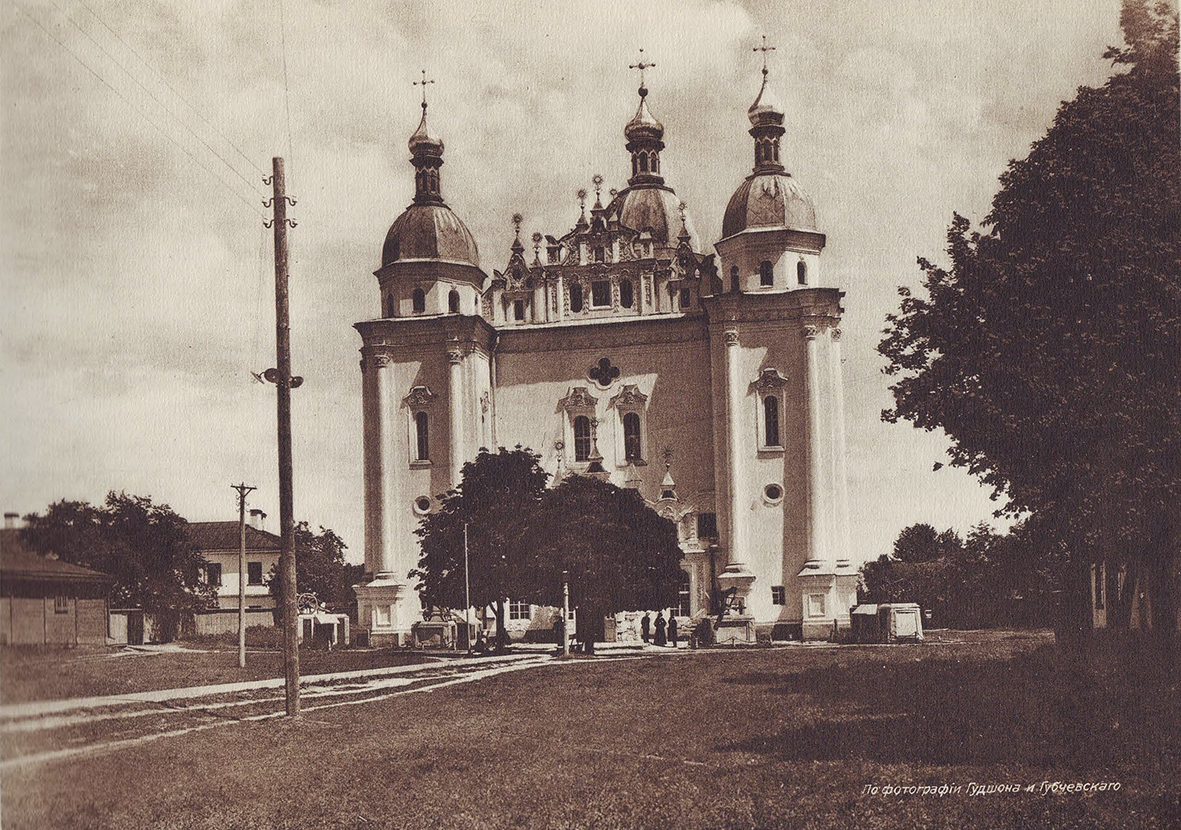
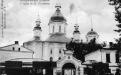
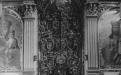
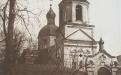
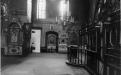
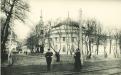
We will start our photo journey from two former parish churches of the Pechersk Town adjacent to the south-western part of the Lavra. These are baroque churches built at the expense of Kyiv Colonel Kostiantyn Mokievsky, a relative of Hetman Ivan Mazepa. The church dedicated to St. Theodosius of Pechersk was constructed in 1698–1700 (Fig. 1), and the Church of the Resurrection of Christ was erected in 1698 (Fig. 3). Both were significantly damaged and lost their interior decoration in the middle of the 20th century. Only old photographs make it possible to find out what their interiors looked like a hundred years ago (Figs. 2 and 4). Since 1992, the St. Theodosius Church has belonged to the Stavropigial monastery of St. Theodosius (Orthodox Church of Ukraine). In 1991, the Church of the Resurrection Church was transferred to the Ukrainian Orthodox Church parish which included veterans and family members of those killed in the war in Afghanistan, which is why it is unofficially called “Afghan Church”.
If you go west from the St. Theodosius Church along Tsytadelna Street, you can get to the ancient Pechersk market square (the area of the current Pechersk market). The parish church dedicated to St. Olga, built in 1837–1839, was located here (Fig. 5). After the closure of the Lavra, at the turn of the 1920s and 1930s, it served as a refuge for part of the Pechersk brethren. It was disassembled in 1935.
A few hundred meters northward, the Church of the Presentation of the Blessed Virgin is still preserved at the corner of Moskovska and Rybalska streets. The building of the church was originally residential. It was built in the early 19th century in the Empire style for the Head of the Kyiv magistrate Georgiy Rybalsky (the street is named in his honor). In the 1870s, the captain's widow Motrona Yegorova bought this house together with the neighboring buildings and built a church for the women's religious community, which in 1901 became known as the Holy Presentation Convent. During the Soviet period, the convent was shut down twice and resumed its activity in the 1990s, but as a monastery. In the photo, you can also see the monastery bell tower destroyed in 1936 (Fig. 6).
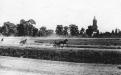
If you turn from the Presentation Monastery to the northeast, you will pass the building of the National Academy of Agricultural Sciences on Mykhailo Omelyanovych-Pavlenko Street. This is the only reminder of the once famous Pechersk hippodrome, which existed until 1965. The building, constructed in 1915-1916, previously housed a totalizator counter, restaurant, and hall for celebrations. A covered double-deck grandstand for four thousand spectators was added on the inside (Fig. 7).
A few hundred meters away the Omelyanovych-Pavlenko Street ends with Glory Square. On the right we can see the Lavra monuments, and right in front, there is the building of the Kyiv Palace of Children and Youth. The Big St. Nicholas Cathedral (“Velykyi Mykola”), one of the most beautiful baroque buildings in Kyiv, stood on this spot for two and a half centuries. It was built at the expense of Hetman Ivan Mazepa in 1690–1694 as the main church of the St. Nicholas Monastery. In 1831 the cathedral became a garrison one and was named Military St. Nicholas Cathedral. It was destroyed in 1934 (Fig. 8).
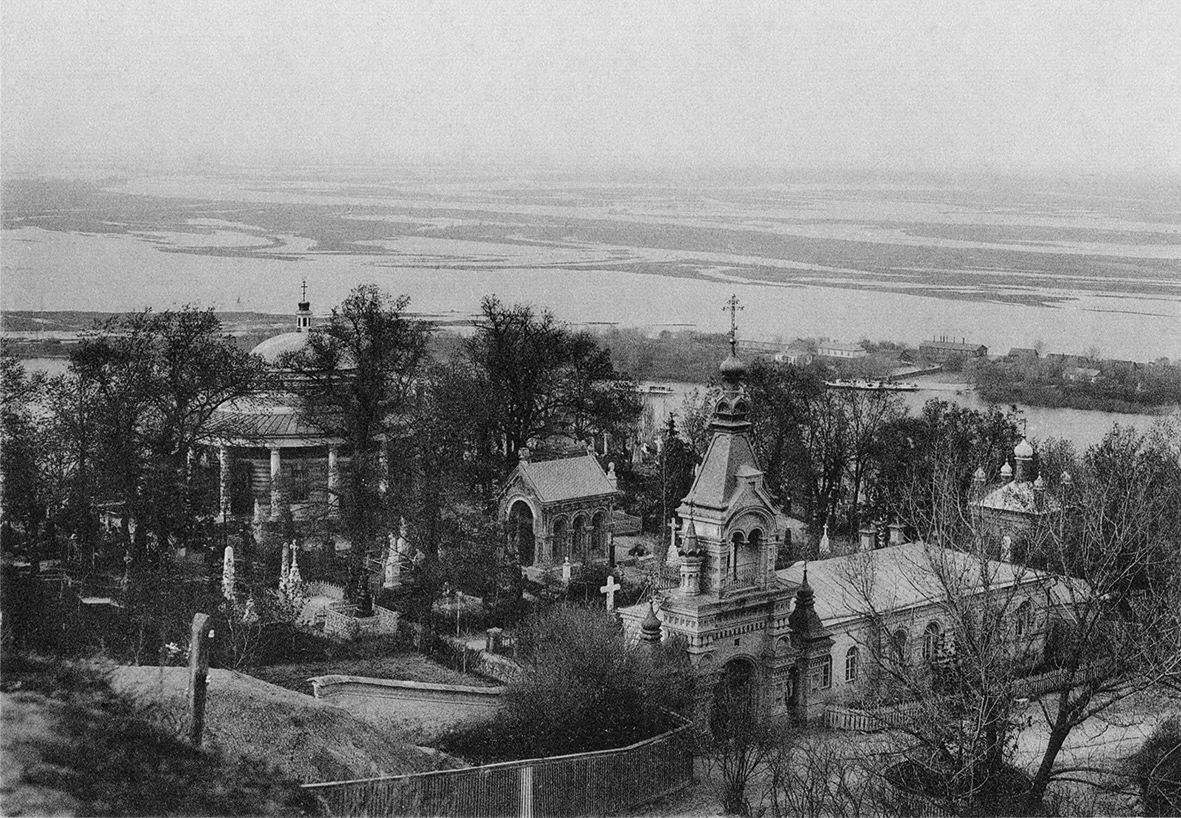
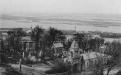
The area located at the foot of the Cathedral, towards the Dnieper River, is known as the Askold's Grave tract. This place is associated with the legend of the murder of Askold and Dir. Not later than the 15th century St. Nicholas Hermitage Monastery was founded here. In 1715 the monastery was expanded on a hill above, meanwhile this area became a cemetery - first monastic, and from 1786 - a citywide (Fig. 9). In 1935 the cemetery was liquidated. A small Empire church, designed by the architect Andriy Melensky in 1809, has been preserved to the present day. After the liquidation of the cemetery, a park pavilion was arranged here. In 1992 the church was transferred to the religious community of the Ukrainian Greek-Catholic Church.
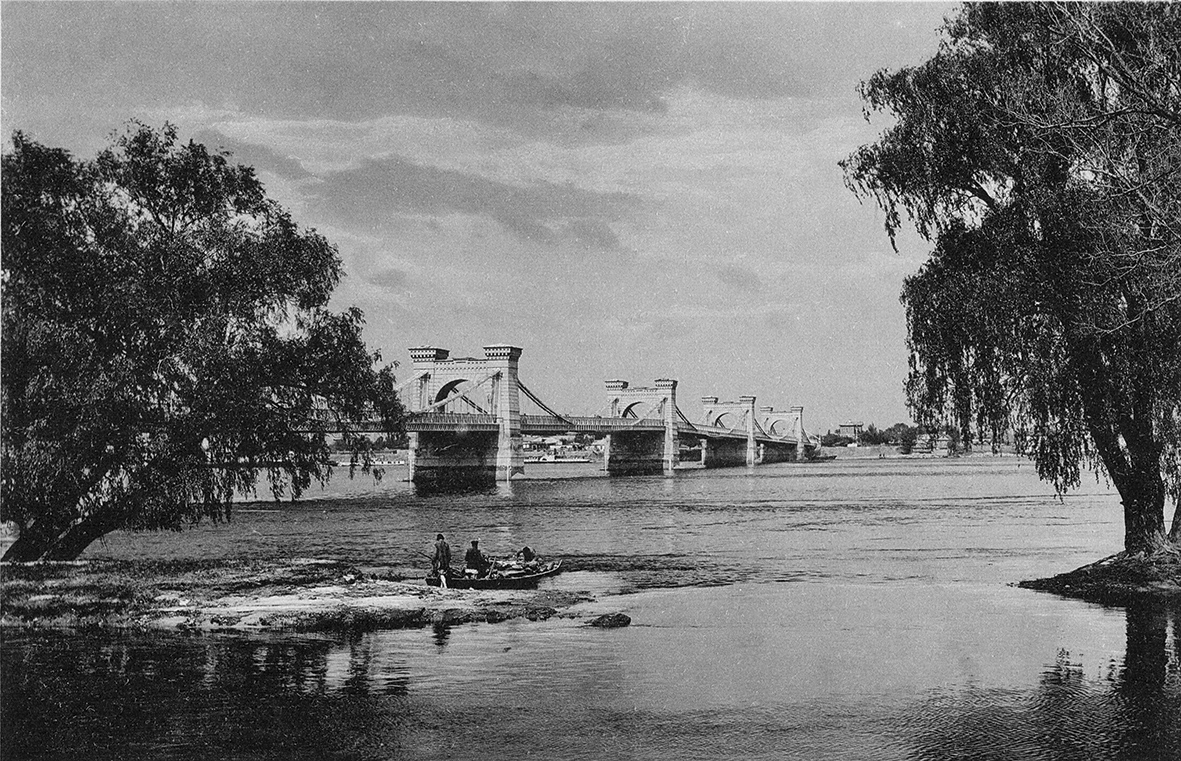
The first monumental bridge across the Dnieper River, Mykilskyi chain bridge, appeared near the Askold's Grave in 1853. It existed until 1920. Its total length was 776 m, width - 16 m (Fig. 10).
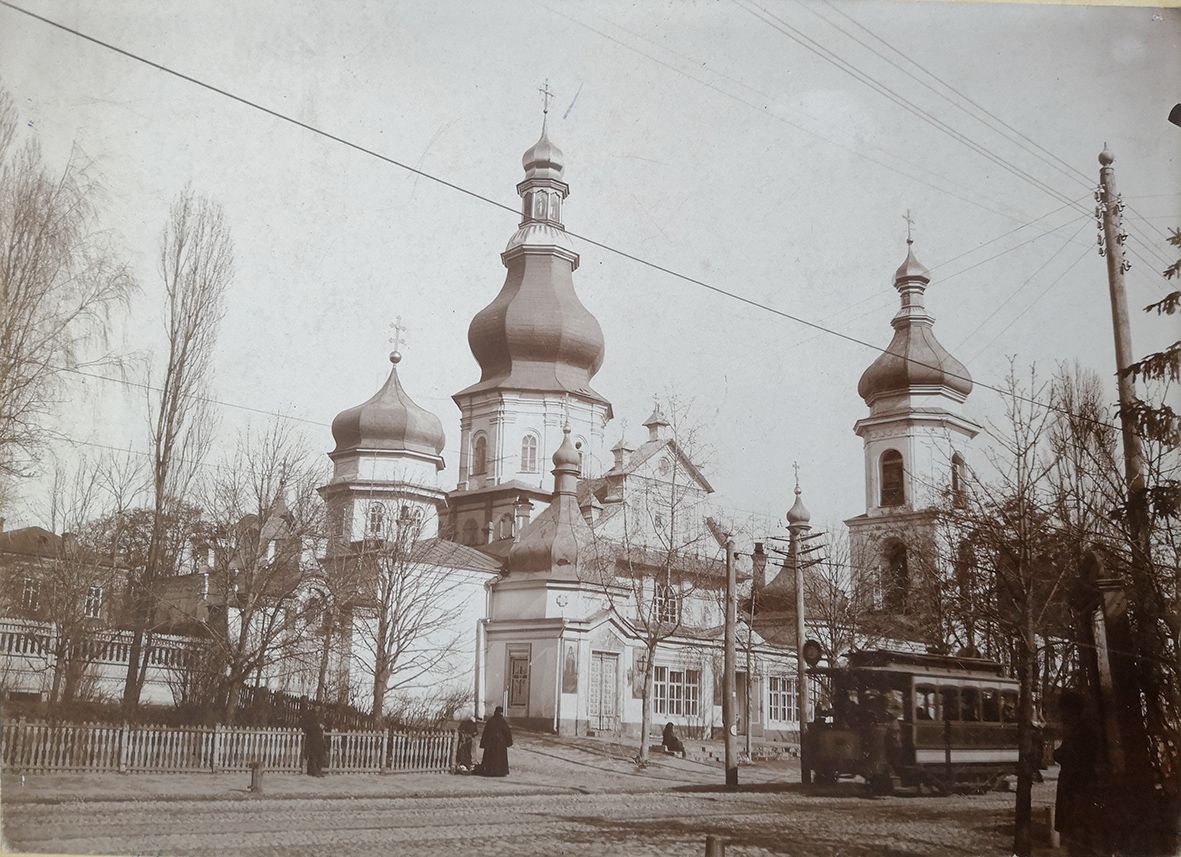
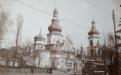
It has already been mentioned above that the St. Nicholas Monastery was transferred from Askold's Grave. In 1715, a church was built on what is now Ivan Mazepa Street, just north of Velykyi Mykola (Big St. Nicholas Cathedral), which was immediately renamed Mala Mykilska (Small St. Nicholas Church). In 1843 a bell tower was built near it (Fig. 11). In the 1930s the monastery complex was destroyed.
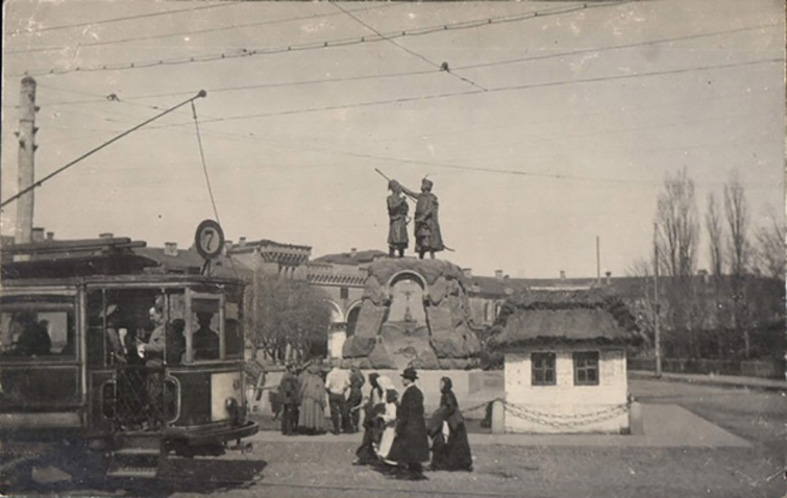
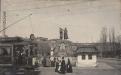
The monument to Vasyl Kochubey and Ivan Iskra, buried in the Kyiv-Pechersk Lavra (Fig. 12), became a rather peculiar symbol of its time. Due to its openly political content, the monument did not last long (1909-1917). In 1923 a cannon was installed on the pedestal of that monument.
Next week in the project “Memories of the Kyiv-Pechersk Lavra” you will be able to see historical photos from the series “Church and clergy in the Lavra photographs”.
Let’s discover the beauties of the Preserve’s collection together!
#музейзафіліжанкоюкави, #museumcoffeebreak, #museumteabreak, #MuseumFromHome





/socialmedia/icons/levelten/glossy/32x32/youtube.png)
/socialmedia/icons/levelten/glossy/32x32/facebook.png)
/socialmedia/icons/levelten/glossy/32x32/twitter.png)